Weather Station Details

Home ] [ Weather Station Details ] Trends over the last 50 years ] 2005 Weather ] 2006 Weather ] 2007 Weather ] 2008 Weather ] Monthly Data ] Annual Data ] Historical Weather Information ] Long Term Averages ] Extremes ] Pressure Charts ] Satellite Images ] Hurricane Katrina ] How Weather Affects... ] Glossary of Terms ] Calculators and Tables ] Links ] Rain Catch Project ]


SITE DETAILS


Location:  Halesowen, West Midlands, UK


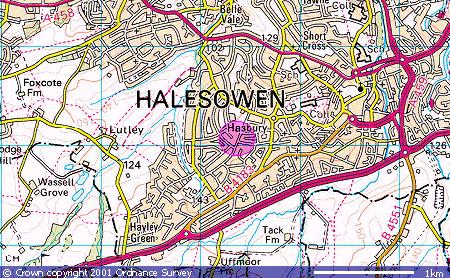
Halesowen
lies 13km to the west of Birmingham city centre in the West Midlands of England.

The weather station lies within a residential area 1km west of, and higher than, Halesowen town.  This is quite a hilly area on the local scale, with many minor hills and dips.

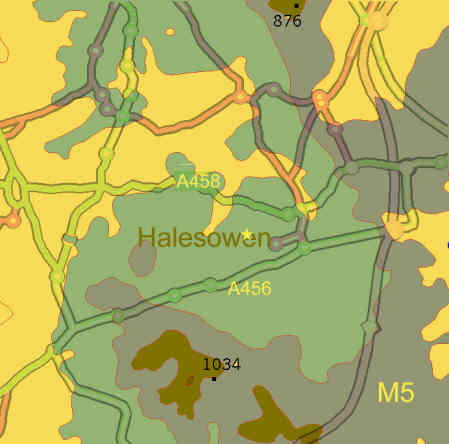
More significant ranges of hills lie a few km to the E, stretching from Dudley to Quinton, and the 300m high Clent and Romsley hills lie to the SW and S. (see map below)

The area is rather more exposed to the W and NW through the 'Cheshire gap', the only direction without significant hills in the way, so weather from that direction arrives here relatively unhindered.

Contour map of area around Halesowen

dark brown >1000ft (305m).
mid brown >800ft (244m)
mid grey >600ft (183m)
green >400ft (122m)
yellow >200ft (61m)
N.B. spot heights are in feet

In the Midlands, rain falling to the west of the 'Great Divide' (the grey north to south strip of high ground on the right of the map above) ends up in the Irish Sea or Bristol Channel, while rain falling to the east ends up in the North Sea.   Rainwater from Halesowen, being just to the west of the 'Great Divide',  drains into the Upper Stour valley and via the R. Stour and its tributaries into the R. Severn at Stourport, finally into the sea through the Bristol Channel.

Soil here is mostly heavy clay, so the ground tends to retain moisture.


Station position : Latitude 52 deg 27_min N Longitude 2 deg 4 min W
National Grid Reference: SO 954 831
Altitude of station: 150 metres above Mean Sea Level
Exposure of station: average
Times of regular observations: 0900 clock time


RECORDING INSTRUMENTS IN USE:

Temperature
temperature/ maximum/ minimum/ rel humidity (electronic Muka WS888R05)*
temperature/ maximum/ minimum (electronic digital Oregon Scientific MTR101)*

Rainfall
Raingauge (collector and measuring cylinder)*
Automatic raingauge (electronic Oregon Scientific tipping bucket RGR122)*

Pressure
Barograph (electronic 24 hour barograph Muka WS000R05)*
(electronic 24 hour barograph Oregon Scientific BA888)*


DAILY MEASUREMENTS TAKEN:


Max temp (recorded)
Min temp (recorded)
Mean temp (calculated)
Soil temperatures
Relative humidity (recorded)
Dew point (calculated)
Daily Rainfall (recorded)
Max pressure (recorded)
Min pressure (recorded)
Pressure (recorded)
Air frost
Snow cover
Hail
Thunder

....and maybe wind direction and speed one day!!

Monthly statistics based on these daily measurements (calculated)
Annual statistics based on these daily measurements (calculated)
Long term statistics based on these measurements (calculated)


INTERESTS 


My background is physics, mathematics and computing, and I currently teach IT. I have a long-standing interest in weather and climate. I did work at the Met Office, once, but only a 4 week holiday job as a student in the late 1960s !  I started recording daily weather data in 1993, partly with a view to correlating our local climate with growing conditions for our home-grown fruit and vegetables, but I have also used the results for other things, e.g. to look for correlation between temperatures and our fuel bills! I have contributed weather statistics to COL (climatological observers link), a network of 400 enthusiasts who share data, since December 2004.


     © www.halesowenweather.co.uk                         email:  info@halesowenweather.co.uk